

As the 2023 analysis by Consumer Affairs revealed, invisible aligner therapy is suitable for mild to medium tooth movements 80 percent to 90 percent of the time. This impressive success rate makes invisible aligners a popular choice for teeth straightening. Many people also consider Invisalign cost when deciding whether this option is right for them. But how do Invisalign aligners work, and why do so many people choose them over traditional braces? If you’re considering clear braces for yourself or your child, learning the science behind invisible aligners can help you make an informed decision.
Define clear aligners.
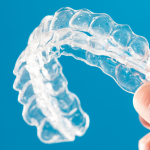
Invisible aligners are a see-through, customized trays that suit over your teeth to softly direct them into the desired position. Unlike customary metal braces, they are almost clear and portable, making them an appropriate choice for adults and children. These trays are bisphenol A-free plastic, offering solace and elasticity while still conveying productive orthodontic treatment.
The innovation beyond invisible aligners.
Invisible aligners utilize modern online technology to outline the motion of your teeth. Here’s an analysis of the invisible aligners process.
Discussion and examination.
A detailed dental evaluation is conducted, involving an online assessment of your teeth. Utilizing 3D scanning innovation, dentists can design a comprehensive plan for your current teeth adjustment.
Medication scheme.
Depending on these scans, a personal treatment scheme is evolved. The scheme draws each phase of tooth movement and offers a schedule for the medication.
Constructing braces.
A bunch of braces is designed for your teeth. Each pair shifts your teeth slowly, generally by about 0.25 to 0.3 mm per brace.
Advancement and wear.
You will wear every brace for about one to two weeks before shifting on to the next pair. The invisible braces affair continues until your teeth extend their last, straightened situation.
How do invisible braces work to shift teeth?
Teeth may seem steadfastly embedded in place, but they sit within a gentle tissue bed that lets for slight action. When pressure is put on over time, the bone and ligament around the tooth adapt to suit the latest place. Clear braces work by putting down a soft, direct force to the teeth in particular positions. The force is divided evenly across the bracers, directing the teeth into a better adjustment over time.
Selected pressure.
Braces put pressure on particular points. The pressure reviving bone restoration, a natural activity where the bone is smashed down and reconstructed to support the tooths new direction.
Slow adaptation.
Each pair of bracers is a little different from the last one. This designs a step-by-step method that slowly moves teeth over time.
Maintenance.
Patients use retainers after finishing the energetic medication to keep the teeth in their current direction. Retainers help safeguard any moving.