
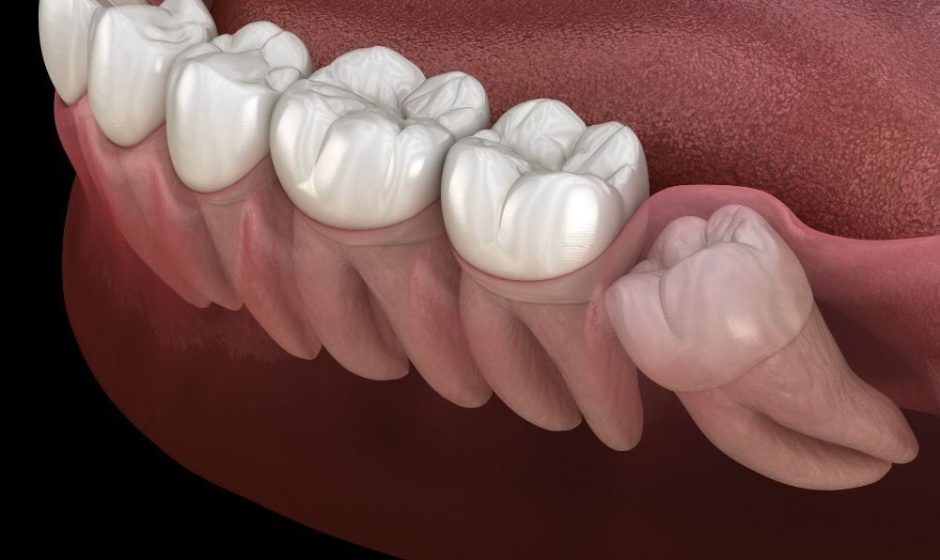

In the timeline of human dental development, the arrival of the third molars-commonly known as wisdom teeth-often marks a period of significant clinical complication. Because the human jaw has evolved to be smaller than those of our ancestors, these final teeth frequently lack the necessary space to erupt into a functional position. This results in impacted wisdom teeth, a condition that serves as a primary catalyst for localized infection and persistent bleeding gums.
The most common complication arising from this lack of space is a condition known as pericoronitis. Understanding the “pericoronitis path” is essential for recognizing why wisdom teeth often require surgical intervention and how they compromise the health of the entire oral cavity.
The Anatomy of an Impacted Trap
When a wisdom tooth is “impacted,” it means it is blocked from fully breaking through the gum line, often tilted against the adjacent second molar or trapped within the jawbone. In many cases, the tooth becomes “partially erupted,” where only a small portion of the crown pierces the gingiva.
The Operculum: A Bacterial Sanctuary
When a tooth partially erupts, it creates a flap of excess gum tissue that sits over the crown, known clinically as an operculum. This flap creates a deep, warm, and moist pocket that is physically impossible to clean with a standard toothbrush or floss.
This space becomes a “bacterial reservoir,” trapping food debris, microscopic proteins, and anaerobic bacteria. Because this pocket is shielded from the mechanical cleansing action of chewing and brushing, the bacteria multiply rapidly, leading to the chronic inflammation that characterizes bleeding gums in the back of the mouth.
Why Impacted Wisdom Teeth Cause Bleeding Gums
Bleeding is the body’s primary vascular response to infection. In the case of impacted third molars, the bleeding is rarely a result of systemic gum disease; rather, it is a localized “alarm bell” for one of the following issues:
1. Acute Pericoronitis
As the bacteria trapped under the operculum flourish, they release toxins that irritate the surrounding soft tissue. The gums become red, swollen, and extremely fragile. Even slight pressure-such as swallowing or closing the jaw-can cause the engorged capillaries in the gum flap to rupture, leading to spontaneous bleeding gums.
2. Mechanical Trauma
Because the gums around an impacted tooth are often swollen, they can interfere with the way the upper and lower teeth meet. This often leads to the opposing tooth “biting down” on the inflamed gum flap (the operculum). This repeated mechanical trauma exacerbates the inflammation and leads to persistent bleeding and ulceration of the tissue.
3. Second Molar Compromise
Impacted wisdom teeth often lean directly against the roots of the healthy second molars. This creates a “tight spot” where plaque accumulates. This not only causes bleeding gums around the wisdom tooth but can actually trigger deep decay and bone loss on the neighboring healthy tooth, potentially leading to the loss of both.
The Symptoms Beyond the Bleeding
While bleeding is a primary indicator, the “pericoronitis path” often involves a cluster of increasingly severe symptoms:
- Halitosis (Foul Breath): The stagnant bacteria and decomposing food debris under the gum flap produce a distinct, unpleasant odor.
- Trismus: Difficulty or pain when opening the mouth, caused by inflammation spreading to the “masseter” (chewing) muscles.
- Tonsillar Pain: The infection can spread to the back of the throat, mimicking the symptoms of a sore throat or tonsillitis.
- Lymphadenopathy: Swelling of the lymph nodes under the jaw as the immune system attempts to fight the localized infection.
Clinical Management and Triage
An impacted wisdom tooth that is causing infection and bleeding cannot be “cured” through hygiene alone, as the problem is structural. However, management is divided into two phases:
Phase 1: Arresting the Infection
Before a surgeon can safely remove the tooth, the acute inflammation must be reduced.
- Professional Irrigation: A dentist may flush out the debris from under the gum flap using a specialized syringe.
- The Role of Antimicrobial Mouthwash: In this stage, a therapeutic mouthwash is a critical lifeline. Since bristles cannot reach under the operculum, a liquid rinse is the only way to deliver germ-killing agents into the reservoir. Rinsing helps neutralize the bacteria, reduces the swelling of the gum flap, and stops the immediate cycle of bleeding gums.
Phase 2: Surgical Extraction
In the majority of cases involving impacted wisdom teeth, extraction is the only permanent solution. By removing the tooth, the “trap” is eliminated, the operculum is removed, and the gums can finally heal and reattach firmly to the remaining molars.
Conclusion: Don’t Ignore the “Back-of-Mouth” Bleed
Many patients dismiss bleeding gums in the very back of the mouth as a temporary irritation or a “tough piece of food” stuck in the gums. However, when paired with the presence of impacted wisdom teeth, this bleeding is a clear sign of pericoronitis-a condition that can quickly escalate into a painful abscess or a spreading facial infection.
By utilizing a high-quality antimicrobial mouthwash to keep bacterial levels low and seeking a professional evaluation for third molar impaction, you can stop the pericoronitis path before it compromises your oral health. Wisdom teeth may be the last to arrive, but they should not be the reason you lose the health of your smile.