
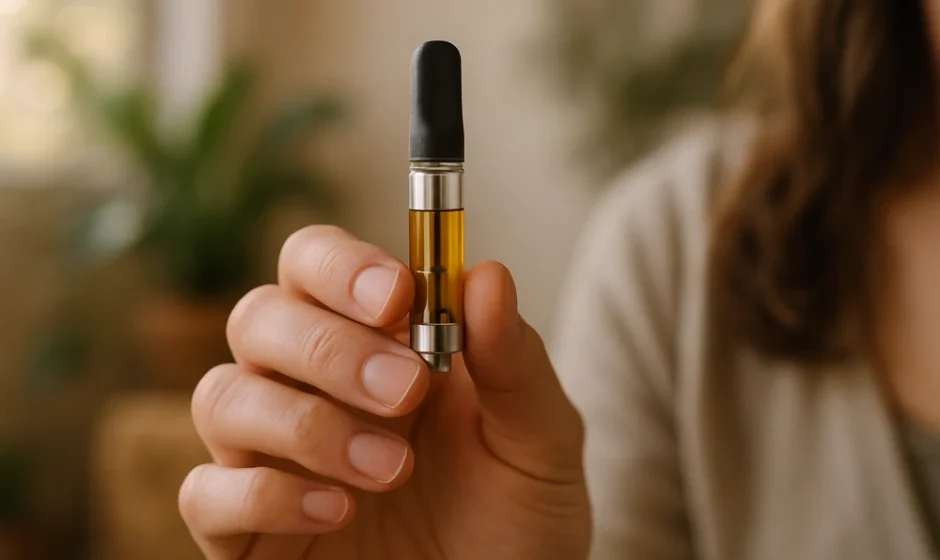

A prefilled rechargeable vape battery gets reused by retaining the battery unit, while only the empty cartridge is detached and replaced with a fresh one. Charge stored in the battery remains active throughout this process, making the battery a permanent part of the device rather than a disposable component. Ezee builds its devices on exactly this structure, separating the battery from the cartridge so each part follows its own replacement schedule independently.
Battery cartridge structure
Cartridge material carries the liquid and the wick that draws it toward the heating coil. Battery cells store charge and deliver current each time the user draws through the mouthpiece. When a cartridge empties, it detaches, a full one connects in its place, and the battery continues from wherever its charge level already sits.
Swapping cartridges does not affect stored charge. A battery sitting at half capacity stays at half capacity after a cartridge change. Both components share a physical connection but operate on completely separate cycles, allowing the battery to outlast many cartridges across its working life.
- No buttons are involved in normal use, reducing mechanical wear on the outer casing.
- USB charging feeds current directly into the cell without opening any part of the device.
- A fresh cartridge attaches without affecting the charge level already held in the battery.
- Battery performance stays consistent whether paired with its third cartridge or its thirtieth.
Charge cycle function
Lithium-ion cells age through charge cycles, where one full drain followed by one full recharge counts as a single cycle. Each cell handles a large number of cycles before any capacity drop becomes noticeable during a draw. Charging before reaching completely flat preserves cell performance across a longer stretch of use compared to repeated deep discharges each time the charge runs low.
Lithium chemistry responds better to partial top-ups than to full depletion cycles, which means regular charging habits directly affect how long performance holds. A battery charged before cutting out completely tends to maintain consistent power output across far more uses than one that regularly drains to nothing before connecting to a charger. Differences show gradually over weeks and months of daily use rather than immediately after a few charges.
USB recharge process
Connecting a battery to a USB charger sends current into the cell until the internal circuit registers a full charge, at which point flow stops automatically. No timing or monitoring is needed from the user beyond making the physical connection and returning when charging is complete. Once full, detaching from the charger and reconnecting the cartridge makes the device immediately ready for use without any additional steps between those two actions.
Drawing on the mouthpiece activates the device straight away. A sensor inside picks up the inhale and triggers current delivery to the heating element within the cartridge, producing vapour within a fraction of a second. Activation stops the moment a draw ends, with no manual input required at any point during use.
Cartridges are the only component that leaves the device on a regular basis. Battery cells, draw sensors, and connection points remain in place across the full working life of the device. Replacing only the cartridge while the battery stays active is what keeps the rechargeable format functional and straightforward to maintain across extended daily use without any technical involvement from the user.