Finding a new bump on your skin can be unsettling—especially if it seems to appear “out of nowhere.” The reassuring truth is that many skin growths are benign, meaning non-cancerous. Still, some harmless-looking spots can mimic more serious conditions, so it’s smart to know the common types and the signs that warrant a professional evaluation. Medical dermatology offices commonly evaluate and treat benign growths (including warts and skin tags) and can remove them when needed for comfort, function, or peace of mind.
Below are eight common benign skin growths, what they typically look/feel like, and when to get them checked.
1) Skin tags (acrochordons)
What they are: Soft, small growths that often appear where skin rubs—neck, underarms, groin, eyelids. They may hang off the skin on a tiny stalk and can be skin-colored or slightly darker.
Why they show up: Friction, genetics, and metabolic factors can play a role.
When to check: If it’s bleeding repeatedly, changing quickly, or you’re unsure it’s actually a skin tag.
Avoid: DIY cutting/tying at home—bleeding and infection are common problems, and misidentifying a lesion can delay appropriate care.
2) Common warts (verruca)
What they are: Viral growths caused by HPV. They often have a rough surface and can show up on hands, fingers, knees, or feet (plantar warts).
Why they matter: They’re contagious (skin-to-skin or shared surfaces), can spread, and may be painful—especially on feet.
Typical treatment: Office-based options like freezing (cryosurgery) are common and can be effective.
When to check: If a wart is painful, spreading, persistent, on the face/genitals, or if the person has diabetes or immune suppression.
3) Seborrheic keratoses (“stuck-on” spots)
What they are: Very common, non-cancerous growths that can look waxy, scaly, or “stuck on.” Colors range from light tan to dark brown/black and they often appear on the chest, back, head, or neck.
Why they’re confusing: They can look alarming, and occasionally a skin cancer can resemble one—so new, fast-changing, or unusual spots deserve an exam.
When to check: If it changes rapidly, bleeds easily, looks very different from your other spots, or you’re unsure what it is.
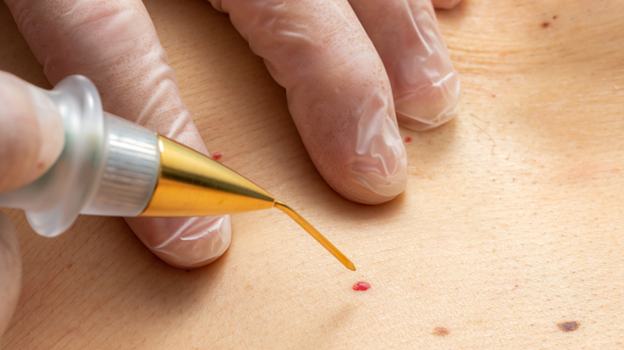
4) Cherry angiomas (“red dots”)
What they are: Small, bright red (sometimes purple) bumps made of tiny blood vessels. They’re benign and common in adults.
Common issues: They can bleed if scratched or nicked while shaving.
When to check: If a red spot changes shape/color quickly, starts bleeding often, or you’re not sure it’s a cherry angioma.
5) Dermatofibromas (firm “button-like” bumps)
What they are: Small, firm nodules—often on the legs—that may look pink to brown. A classic clue is the “dimple sign” (it dimples inward when squeezed from the sides).
Why they show up: Sometimes after minor skin trauma (like an insect bite), though many appear without a clear cause.
When to check: If it’s growing, painful, ulcerating, or changing in color.
6) Epidermoid (epidermal inclusion) cysts
What they are: Smooth, round bumps under the skin—often on the face, neck, trunk, or back. Some have a visible central “pore.”
What can happen: They can get inflamed, tender, or infected and may drain.
When to check: If it becomes painful, red/hot, rapidly enlarges, drains foul-smelling material, or you’re unsure it’s a cyst.
Avoid: Squeezing or “popping” cysts—this can worsen inflammation, cause infection, and increase scarring.
7) Milia (tiny white “seed” bumps)
What they are: Small, white or yellowish bumps—often on the face—caused by trapped keratin near the surface of the skin.
Common in: All ages, including adults, and can show up around the eyes or cheeks.
When to check: If they’re widespread, persistent, or you’re not sure whether it’s milia vs. another condition.
8) Benign moles (nevi)
What they are: Growths formed by pigment-producing cells. Many are harmless and stable for years.
When to check: If a mole changes in Asymmetry, Border, Color, Diameter, or Evolving over time—especially if it looks unlike your other moles. Regular skin exams can help catch concerning changes early.
When “benign” still deserves a visit
Even common, non-cancerous bumps should be evaluated if they:
- Grow quickly, change color/shape, or look very different from nearby spots
- Bleed, crust, ulcerate, or don’t heal
- Become painful, hot, or rapidly swollen
- Appear in someone with a weakened immune system
If you want a simple next step, schedule an exam for medical dermatology care—clinicians can identify whether a spot is benign, decide if it needs monitoring or removal, and treat common benign growths (including warts and skin tags) with techniques designed to minimize discomfort and support good cosmetic healing.
This article is for general education and isn’t a substitute for medical advice or diagnosis.